

International Experts Explore Blue Carbon in Tainan’s Beimen, Praising Sustainable 'Chenggong Salt' Story
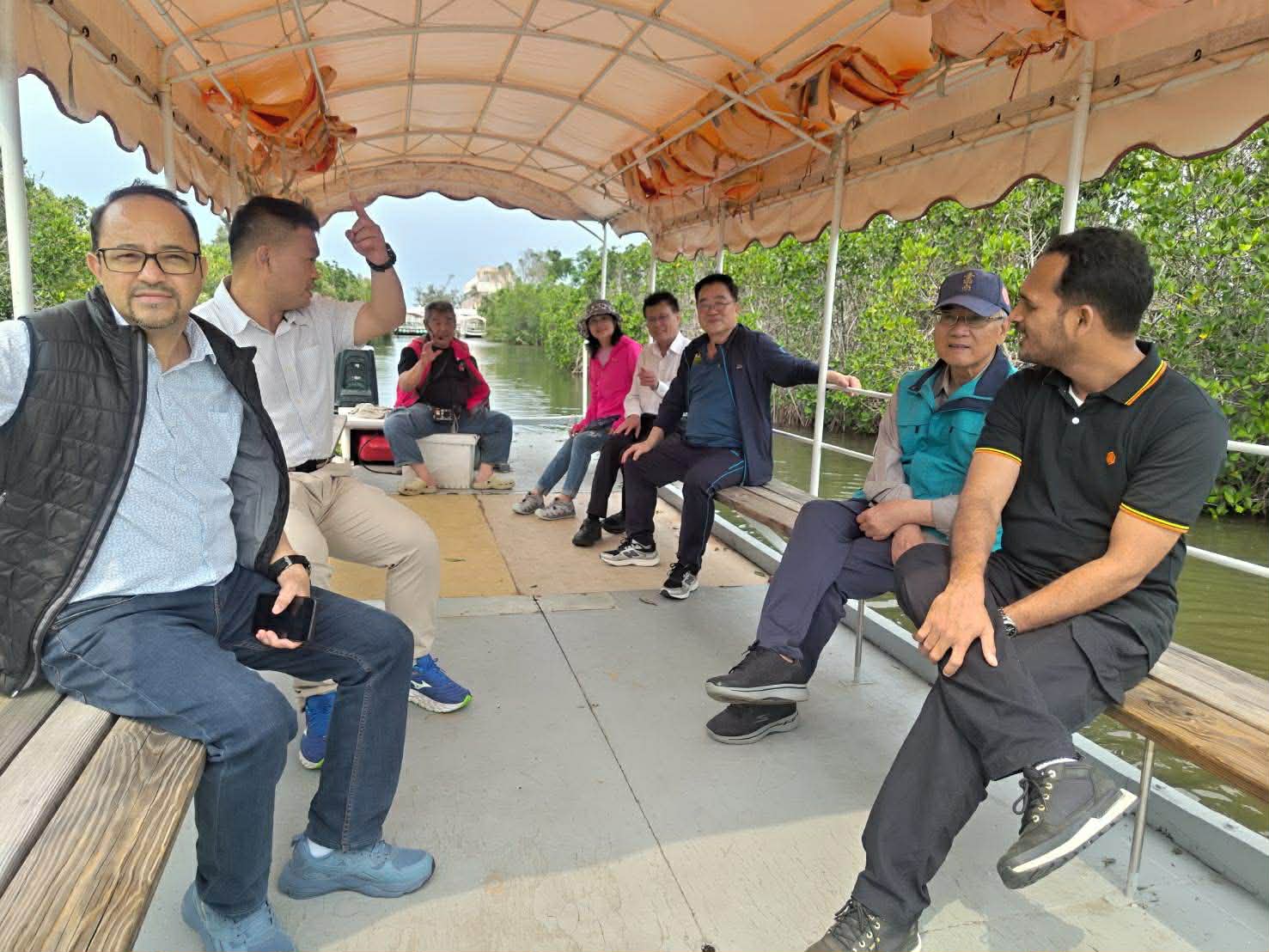
United Nations experts visit Beimen’s mangrove wetlands by boat in Tainan, Taiwan, examining blue carbon ecosystems and coastal conservation efforts. (from Mr. Rong-Mao Lee)

UN officials tour the historic Jingzaijiao tile-paved salt fields in Tainan’s Beimen District, learning about traditional salt-making and its modern sustainability role. (from Mr. Rong-Mao Lee)
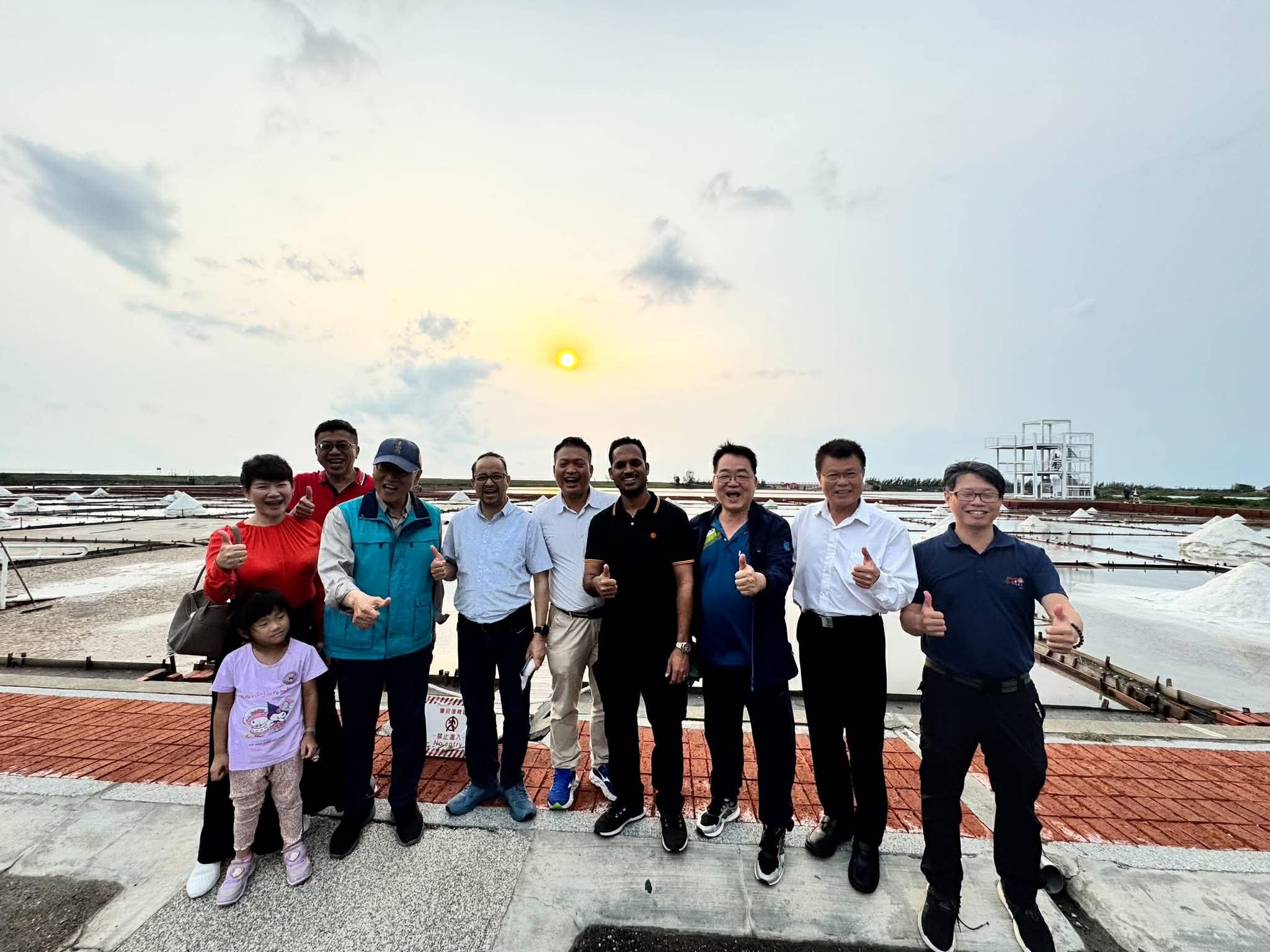
United Nations experts tour the Jingzaijiao tile-paved salt fields in Tainan, Taiwan, observing traditional salt-making practices and the site’s transformation into a sustainable cultural heritage landmark. (from Mr. Rong-Mao Lee)

United Nations experts meet with local industry representatives at the Jingzaijiao salt fields in Tainan, Taiwan, discussing blue carbon research and sustainable coastal development. (from Mr. Rong-Mao Lee)
UNDP and IUCN experts visit Tainan’s Beimen to examine blue carbon ecosystems and the transformation of historic salt culture into a global sustainability model
BEIMEN, TAIWAN, April 22, 2026 /EINPresswire.com/ -- In alignment with the United Nations’ Satoyama Initiative and the global push toward net-zero emissions, Tainan’s Beimen District is advancing ecological transition and low-carbon governance. On Tuesday, an international delegation—including climate and environmental action expert Dr. Pradeep Mehta from the United Nations Development Programme (UNDP) and Dr. Amit Sharma, a member of the International Union for Conservation of Nature (IUCN)—visited the Beimen coastal wetlands to examine blue carbon potential and the transformation of Taiwan’s historic salt industry.
Accompanied by Professor Yen-Hsun Su of National Cheng Kung University, Dr. Chen-Piao Yen of the New Agriculture Cooperative, former Liuying District Chief Wen-Sui Yen, and business leader Shufen Liao, chairwoman of Jinji Construction, the group toured the Shuangchun mangrove wetlands and the Jingzaijiao Tile-Paved Salt Fields, gaining firsthand insight into ecosystem-based carbon storage and cultural revitalization.
Blue Carbon in Beimen: A Natural Carbon Sink
Guided by Beimen District Chief Chien-Nan Lin, the delegation explored the Shuangchun Coastal Recreation Area, home to extensive mangrove and wetland ecosystems. Lin emphasized that Beimen’s coastal habitats serve as critical “blue carbon” reservoirs—ecosystems such as mangroves, seagrass beds, and salt marshes that store significantly more carbon than terrestrial forests.
Professor Su noted that these “blue carbon ecosystems” not only capture large amounts of carbon but can also sequester it for millennia, making them essential nature-based solutions for climate mitigation. Taiwan is currently developing monitoring and verification systems for such ecosystems, and Beimen’s landscape offers strong potential as an international demonstration site.
From 1818 to Sustainability: The Story of Chenggong Salt
At the Jingzaijiao Salt Fields—Taiwan’s oldest tile-paved salt pans, dating back to 1818—Chairwoman Shufen Liao shared the story of “Chenggong Salt,” a brand rooted in more than three centuries of salt-making tradition. Following the nationwide cessation of salt production in 2002, the site was transformed into a cultural preservation area, now managed by Taiwan Heritage Creative.
Liao explained that the name “Chenggong” commemorates the historical figure Zheng Chenggong (Koxinga) and his advisor Chen Yonghua, who introduced advanced salt-making techniques. Produced using the traditional “three exposures and nine sun-drying cycles,” Chenggong Salt integrates sunlight, sea breeze, and artisanal craftsmanship to yield mineral-rich natural sea salt.
The brand has been selected as a national diplomatic gift and recognized among the “Top 100 Sustainable Stories” worldwide, demonstrating how traditional industries can evolve into platforms for cultural, ecological, and economic sustainability.
Corporate Sustainability Meets Blue Carbon Science
Liao further outlined Jinji Construction’s future vision, emphasizing its commitment to supporting scientific research and conservation of blue carbon ecosystems. By integrating environmental, social, and governance (ESG) principles with marine conservation, the company aims to contribute to both ecological protection and sustainable development.
Her efforts and long-term investment in blue carbon research were highly commended by the visiting experts, who praised the company’s role in bridging private-sector leadership with environmental stewardship.
International Recognition of a Socio-Ecological Model
Dr. Mehta highlighted Beimen as a compelling example of integrating coastal conservation with traditional industries, aligning with global strategies for climate adaptation and socio-ecological production landscapes and seascapes (SEPLS). Dr. Sharma added that the integration of marine conservation, cultural heritage, and carbon sequestration presents a model of high international relevance.
Toward a Net-Zero Future
District Chief Lin reaffirmed Beimen’s commitment to safeguarding its fragile coastal ecosystems and cultural assets through collaboration with international experts and private-sector partners. By combining blue carbon strategies with cultural heritage, Beimen aims to advance a resilient green economy and move steadily toward a sustainable, net-zero future.
About Satoyama Mace Initiative
The Satoyama Mace Initiative is a UNU-IAS/IPSI endorsed program led by the SEPLS Carbon Credit Regional Revitalization Center, focusing on nature-based carbon sequestration, biodiversity conservation, and rural revitalization. It pioneers globally applicable biodiversity-SDGs carbon credit methodologies, empowering farmers to benefit from international carbon markets while promoting climate resilience and sustainable development.
The Satoyama Mace Initiative (SMI) today announced a global Indigenous Partnership Invitation, calling on Indigenous communities worldwide to collaborate in a new generation of nature-based carbon programs aligned with the Kunming-Montreal Global Biodiversity Framework (KMGBF). The initiative seeks to strengthen Indigenous stewardship of Socio-Ecological Production Landscapes and Seascapes (SEPLS) by linking traditional ecological knowledge with international carbon markets, creating sustainable economic pathways while preserving biodiversity and cultural integrity.
Yen-Hsun Su
SEPLS Carbon Credit Regional Revitalization Center
email us here
Legal Disclaimer:
EIN Presswire provides this news content "as is" without warranty of any kind. We do not accept any responsibility or liability for the accuracy, content, images, videos, licenses, completeness, legality, or reliability of the information contained in this article. If you have any complaints or copyright issues related to this article, kindly contact the author above.
