

Urban Light Pollution Disrupts Predator–Prey Dynamics in California’s Wild Cats
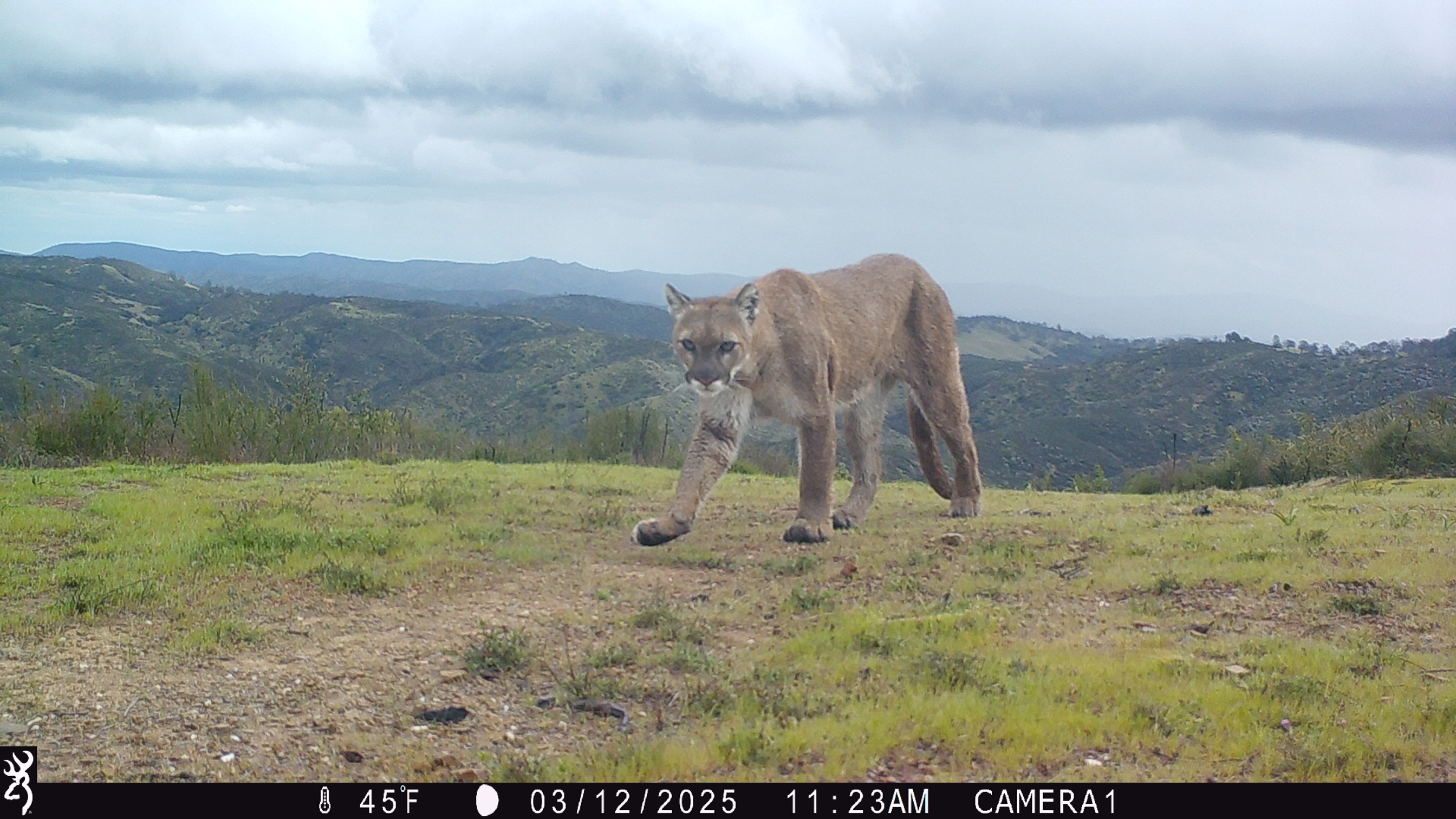
San Francisco puma traveling at the urban edge
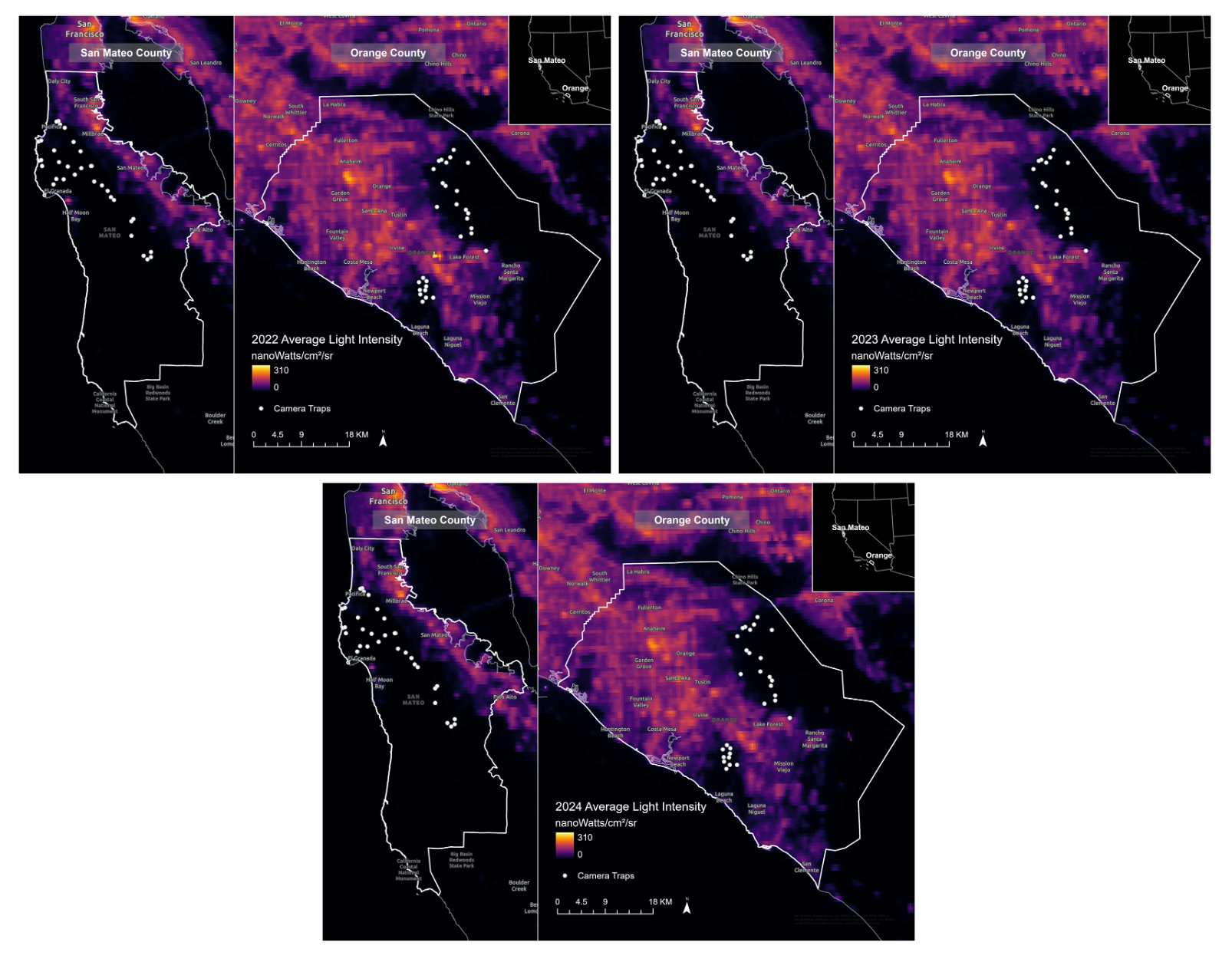
Map of artificial light at night in CA
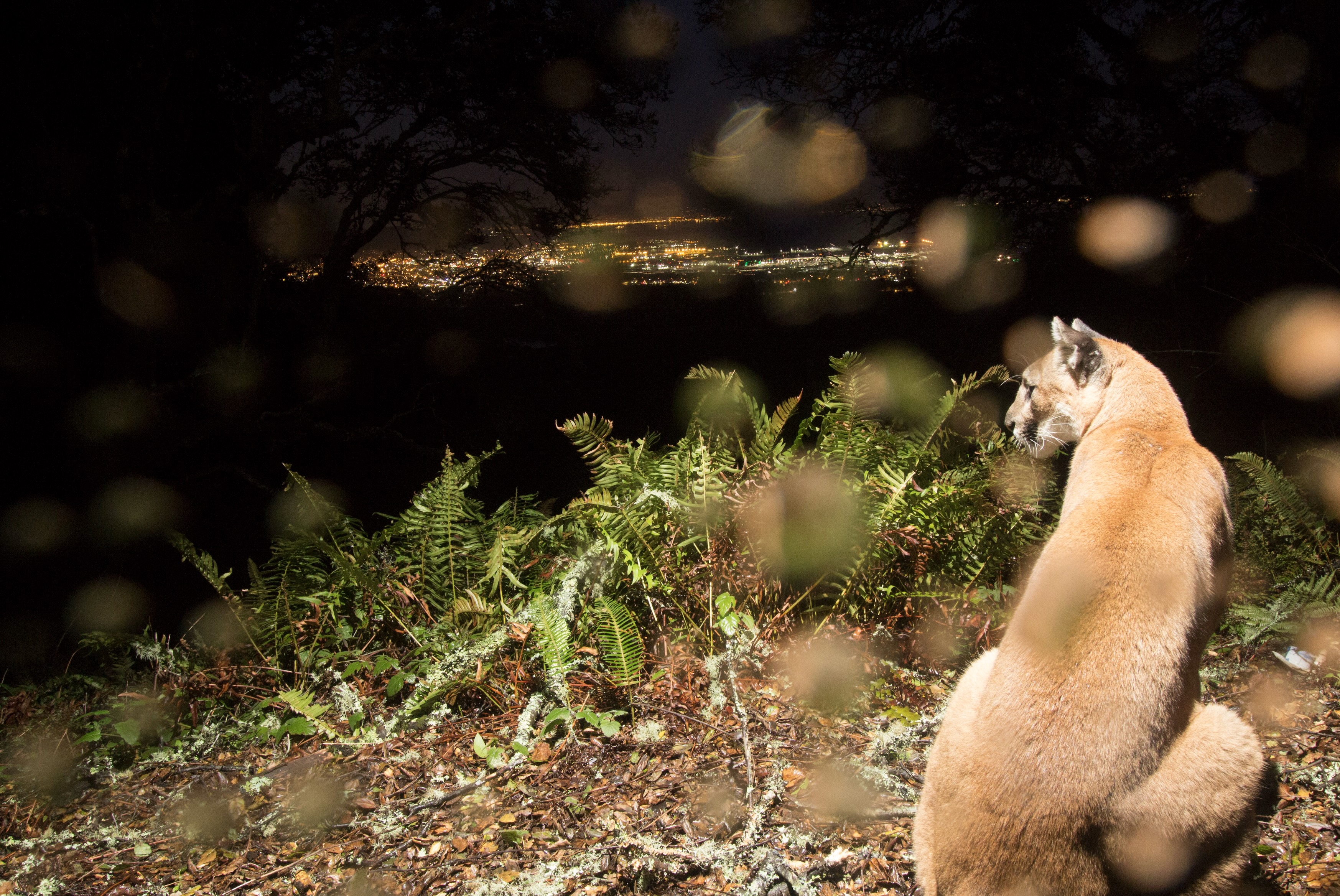
SF puma at night
Findings highlight the importance of dark, connected landscapes for wildlife living near urban areas.
While many studies have documented the impacts of habitat loss and human disturbance on wildlife, far less is known about how sensory changes in urban environments, such as artificial light, affect animal activity and predator–prey relationships.
The new study examined how urbanization influences the behavior of an apex predator, the puma, a co-occurring mid-sized carnivore, the bobcat, and the puma’s primary prey, the mule deer.
Researchers analyzed more than three years of camera-trap data collected from 61 monitoring stations in protected landscapes in Orange County and San Mateo County to understand how artificial light pollution and human activity influence wildlife activity patterns.
Key Findings
The study found that different species respond to urban environments in strikingly different ways.
Both pumas and bobcats avoided areas with higher levels of artificial light pollution. Pumas were also less active at night in brightly lit areas and avoided locations with higher levels of human activity.
In contrast, mule deer increased their nighttime activity in illuminated areas, suggesting they may preferentially use spaces where predators are less likely to roam.
The research also revealed that the broader urban context shapes wildlife responses. In Orange County, where development is more intense and habitat fragmentation is greater, puma activity peaked later at night compared to the darker and more connected landscapes of San Mateo County.
“Artificial light is one of the fastest-growing forms of human disturbance, yet it’s rarely considered in wildlife management,” said Zara McDonald. “This research shows that keeping parts of the landscape dark may be just as important for wildlife as protecting habitat.”
Implications for Wildlife Conservation
The findings suggest that light pollution may be an overlooked driver of wildlife behavior in urbanizing landscapes. While roads and development have long been recognized as barriers to wildlife movement, nighttime illumination may also influence how predators hunt and how prey attempt to avoid them.
Artificial light is expanding globally, and even protected areas are increasingly exposed to nighttime illumination. Nocturnal predators like pumas have vision adapted to low-light environments, and brighter nights can reduce hunting efficiency while compressing the window of time when animals can move and forage safely.
The study highlights the importance of maintaining dark and connected open spaces in and around urban regions to buffer wildlife from sensory disturbance. Incorporating dark-sky considerations into land-use planning and park management could help reduce these impacts.
The research is particularly timely following the recent decision by the California Fish and Game Commission to grant permanent Threatened status to puma populations in the San Francisco Bay Area and Southern California due to reduced genetic diversity and extreme habitat isolation.
About Felidae Conservation Fund
Felidae Conservation Fund is a nonprofit research and conservation organization dedicated to studying wild cats and the ecosystems they inhabit. Through a One Health approach, Felidae conducts long-term research on wild felids and works with communities to promote coexistence between people and wildlife.
Zara McDonald
Felidae Conservation Fund
+1 415-909-5229
email us here
Visit us on social media:
LinkedIn
Bluesky
Instagram
Facebook
YouTube
TikTok
X
family group in CA urban edge
Legal Disclaimer:
EIN Presswire provides this news content "as is" without warranty of any kind. We do not accept any responsibility or liability for the accuracy, content, images, videos, licenses, completeness, legality, or reliability of the information contained in this article. If you have any complaints or copyright issues related to this article, kindly contact the author above.
